Reflections by Kirsty O’Connell, Local Leader – Upper Hunter
The Upper Hunter is entering a period of significant and challenging transformation. As coal‑fired power stations close and mining activity evolves, people want clarity about jobs, land use, investment and the long-term future of the region. A key part of this transformation is understanding how the energy transition becomes part of our region’s future – not something that happens to us, but something we shape together.
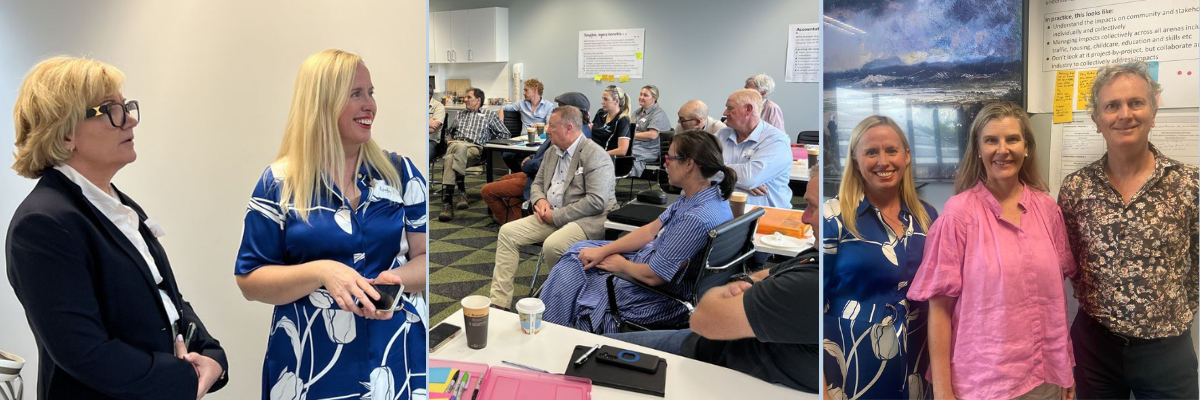
Earlier this month, leaders from our communities, businesses, industry and government came together in Muswellbrook for the Regional Energy Accord Upper Hunter Roundtable. The conversation focused on how we can manage the next phase of industrial change and harness the opportunities ahead to build a more diverse and unified regional economy.
Learning from previous industrial cycles
Participants were clear: we must not repeat the mistakes of the past.
Industries like mining and coal have shaped the Upper Hunter for generations. They brought jobs, investment and a strong sense of identity, but it has also left a legacy of environmental and rehabilitation challenges. As we look to the future, these experiences offer important lessons.
This history doesn’t have to be a barrier to renewable energy projects. Instead, it’s an opportunity to ensure future development is grounded in accountability, long‑term planning and genuine regional benefit.
Cultural heritage and First Nations recognition must be embedded
Our region’s history with First Nations people, including dispossession and cultural harm, cannot and should not be separated from decision about the future. As one attendee said:
“You can’t build the next chapter on top of unresolved history.”
Traditional Owners, cultural heritage and knowledge must be embedded in the planning and engagement processes and reflected in genuine, tangible outcomes for our First Nations people. This is essential to building trust and ensuring the transition is fair and inclusive.
Transparency and early engagement are essential
Genuine engagement isn’t a box‑ticking exercise – it’s the foundation of trust and good decision‑making. While participants expressed fatigue and frustration with consultation processes, there was also a shared belief that our region can thrive if we plan early, engage openly and work together.
When communities are part of the process from the beginning, outcomes are stronger, fairer and more sustainable.
Economic transition must be central to the conversation
While the importance of mining and coal to the region is undeniable, the Upper Hunter is far more than an energy hub. We are home to nationally significant agricultural industries, the thoroughbred horse sector, tourism, viticulture and unique landscapes.
Any conversation about the energy transition must focus on strengthening regional prosperity and support economic diversification, employment pathways and local supply chains. The transition is not just about replacing one industry with another: it’s about building a resilient, future‑ready regional economy.
Locally led regional commitments
The challenges we face in the Upper Hunter are not unique. Regional communities across Australia are navigating industrial and economic change. A national Regional Energy Accord would provide shared principles and a coordinated approach to the transition.
But what stood out at the Roundtable was the willingness of attendees to engage constructively in shaping our region’s future. There was a strong belief that for the Accord to succeed, it must be shaped and owned by the region, with local leaders, institutions and communities working together to define priorities that make sense for the Upper Hunter.
Keeping the conversation going
The message from the roundtable was clear: we need a more coordinated, transparent approach to planning in the Upper Hunter. That means:
- Clearer communication channels
- Consistent engagement with communities
- A shared regional roadmap
- Ongoing collaboration across government, industry, and local organisations, and
- Decisions grounded in evidence and lived experience.
Our region has always been strongest when we work together. By keeping these conversations open and honest, we can shape a future that reflects who we are and what we value.